EXPLORING FRIZZLED RECEPTOR MODULATION BY 2-(4-ISOPROPYLPHENYL)-5-NITROBENZOXAZOLE: A DUAL IN VITRO AND IN SILICO APPROACH
Keywords:
Benzoxazole, Frizzled receptor, cell migration, molecular docking, wound healingAbstract
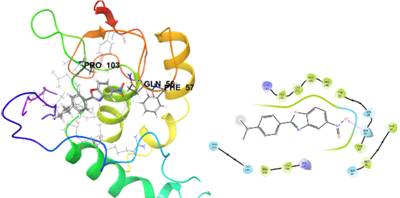
Frizzled receptors, central to Wnt/β-catenin signaling, are promising targets for enhancing wound healing. This exploratory study evaluates the wound healing potential of 2-(4-isopropylphenyl)-5-nitrobenzoxazole, a benzoxazole derivative, through a combined in vitro scratch assay and molecular docking analysis. Normal human dermal fibroblasts were treated with 2-(4-isopropylphenyl)-5-nitrobenzoxazole at 10, 1, and 0.1 µM, and wound closure was assessed at 0, 16, 24, and 40 h. Although no statistically significant differences in migration were observed, time-dependent increases in the motility index were consistent across all groups. Molecular docking against Frizzled (PDB ID: 6TFB) demonstrated stable binding of 2-(4-isopropylphenyl)-5-nitrobenzoxazole, supported by a favorable docking score (–5.746) and key interactions with Gln56, Phe57, and Pro103. These findings suggest that IPNB may interact with the Frizzled receptor without impairing fibroblast migration, warranting further mechanistic studies. This represents the first report of a benzoxazole derivative evaluated for Frizzled modulation in a wound healing context.